The Art of Food-Waste Reduction in Tuscany at QB Cucina
- Farm To Table
By Chef Federico, QB Cucina Castellina in Chianti
Here in Castellina in Chianti, food waste reduction in Tuscany begins with a simple idea: every dish starts with the ingredient, its season, its character, and its origin.
At QB Cucina in Castellina in Chianti, thoughtful ingredient use and efforts to reduce food waste shape how we approach every dish, guided by the freshness, texture, and natural character of each ingredient. It is part of our everyday kitchen practice, where ingredients lead and the process follows.
At QB Cucina, reducing food waste is not simply a philosophy; it is something we work towards through daily kitchen decisions. As a vegetarian fine dining restaurant in Tuscany, we work with ingredients from the estate’s gardens alongside those sourced from selected suppliers, bringing together Tuscan culinary tradition with a thoughtful, innovative way of cooking. This is our way of putting thoughtful ingredient use into practice through the dishes we serve.
Every morning, before preparation begins, each ingredient is carefully observed, its structure, its potential, and how it can be used in full.
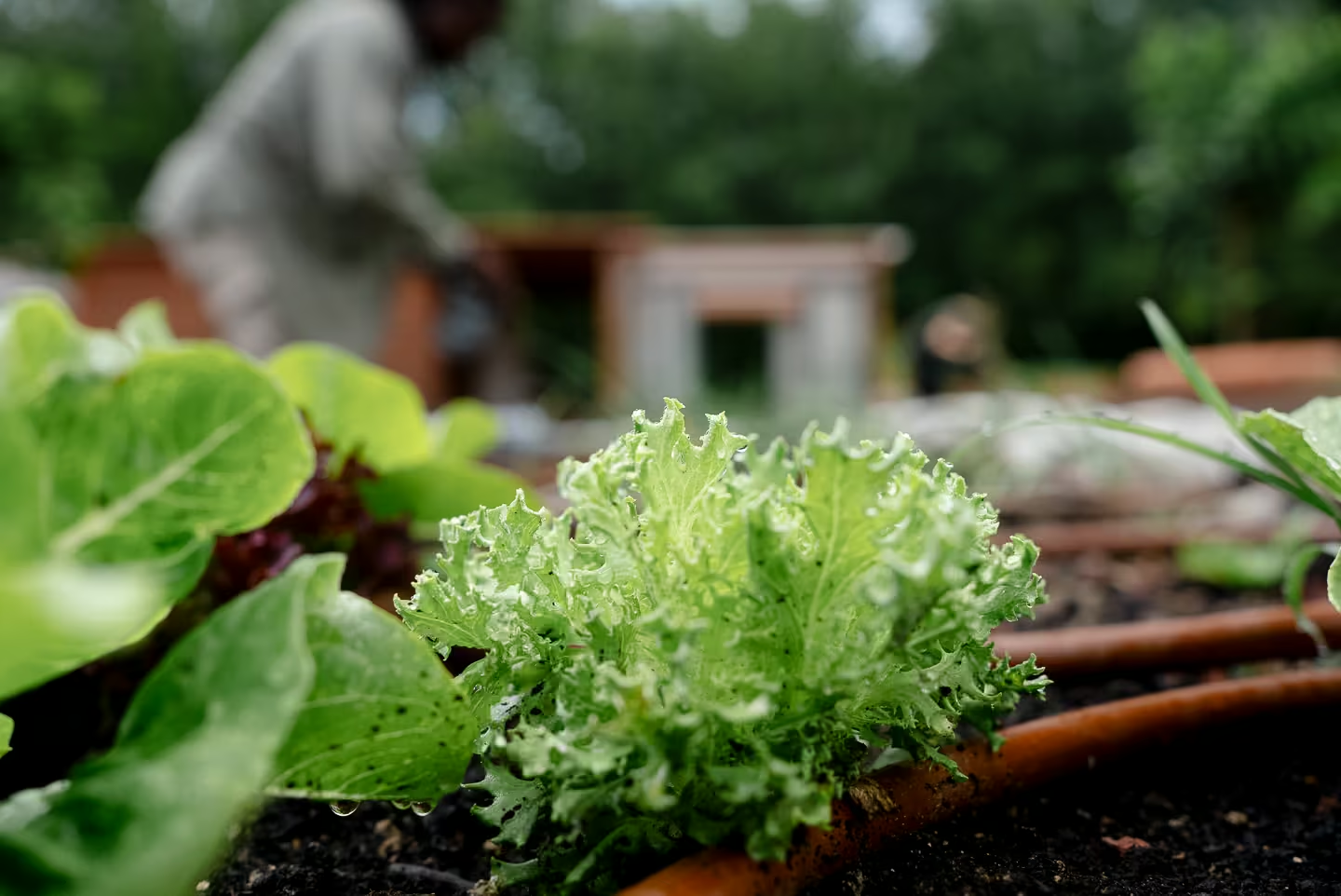
Each morning begins with sourcing. We work with ingredients from the estate’s gardens alongside those sourced from selected suppliers, choosing produce at its seasonal best, the herbs still fragrant from the morning air, the vegetables firm with the memory of the soil. This attention to ingredients allows us to cook with precision, finding ways to value more of each ingredient and reduce unnecessary food waste.
This is where thoughtful ingredient use meets innovation, an ingredient-led approach that is both artfully authentic and quietly refined.
How Food-Waste Reduction Shapes Our Approach at QB Cucina
When people hear “zero-waste,” they sometimes imagine restriction. In our kitchen, it feels like the opposite. It opens up the pantry rather than closing it down.
At QB Cucina, we work with ingredients from the estate’s gardens alongside those sourced from selected suppliers. This attention to sourcing encourages us to make thoughtful use of what arrives in the kitchen. Stale bread is repurposed into breadcrumbs, while the outer parts of fennel and leek are used to make broths or blended into creams. These are not separate processes, but part of how we naturally work with each ingredient in full.
This is what thoughtful vegetarian fine dining in Tuscany looks and tastes like in practice, not a list of rules, but a set of habits built around respect for the ingredient from root to tip. This is how efforts to reduce food waste become part of our daily work in the kitchen.
Our menu changes with the season, not for novelty, but because the land dictates it. In autumn, we follow the porcini and the persimmons. In spring, we move with the wild garlic and the first tender asparagus pushing through the hillside soil. Each dish becomes, in its way, a culinary tribute to the land, a quiet acknowledgment of where we are and what this particular moment of the year is offering.
Few dishes on our menu say more about how we cook than this one. A whole cauliflower, grown in the estate’s gardens or sourced from selected suppliers, arrives in the kitchen as a complete ingredient, and we intend to keep it that way.
The cauliflower is first blanched, then marinated for ten days in a blend of tandoori masala spices, paprika, garlic, onion, and Sichuan pepper. It is then roasted in the oven at 260°C for eight minutes, smoked, and finally finished over an open flame. This process builds depth, allowing the flavour to develop gradually while preserving the structure of the vegetable.
The inner parts of the cauliflower, including the stem and leaves, are sautéed with garlic and onion, then blended into a smooth, velvety cream. Just before serving, homemade miso is incorporated into the cream, produced from fermented Tuscan beans and rice koji, aged for approximately one year.
The dish is completed with a sage pesto, made by blanching the leaves and blending them with garlic and olive oil, and finished with toasted hazelnuts for added texture.
It arrives at the table simply. No unnecessary garnish. Just the cauliflower, whole and unhurried, allowing the ingredient to speak for itself.
A Dish That Shows the Process: Whole Cauliflower with Miso, Sage & Hazelnuts
What Guests Notice
Guests who visit QB Cucina expecting beauty, the view across the hills, the quiet of the dining room, the simplicity of the table. What many do not expect is how grounded the food feels.
There is a texture to the way we cook that people tend to register before they can describe it. It is in the honesty of a broth, the freshness of a herb oil made that morning, the way a vegetable tastes like it still knows where it came from. That is what seasonal food in Tuscany, cooked with intention, can offer.
Several guests have told us that eating at QB Cucina felt like being let into someone’s kitchen, into a place where decisions are made with care, not performance. That is the experience we are always working toward.
This is where thoughtful ingredient use meets innovation, not in technique for its own sake, but in the quiet intelligence of finding ways to use more of each ingredient, reducing unnecessary food waste, and letting the ingredient lead.
Experience QB Cucina
QB Cucina offers a vegetarian fine dining experience in Castellina in Chianti where ingredients are treated with care and every dish reflects a connection to the land and the seasons.
Discover thoughtful ingredient use and creative vegetarian cooking at QB Cucina. Book your table and experience it firsthand.
- Farm To Table, Sustainable Living
- Farm To Table, Sustainable Living