Rainwater Collection And Drip Irrigation At One Belvedere Tuscany
- Sustainable Living
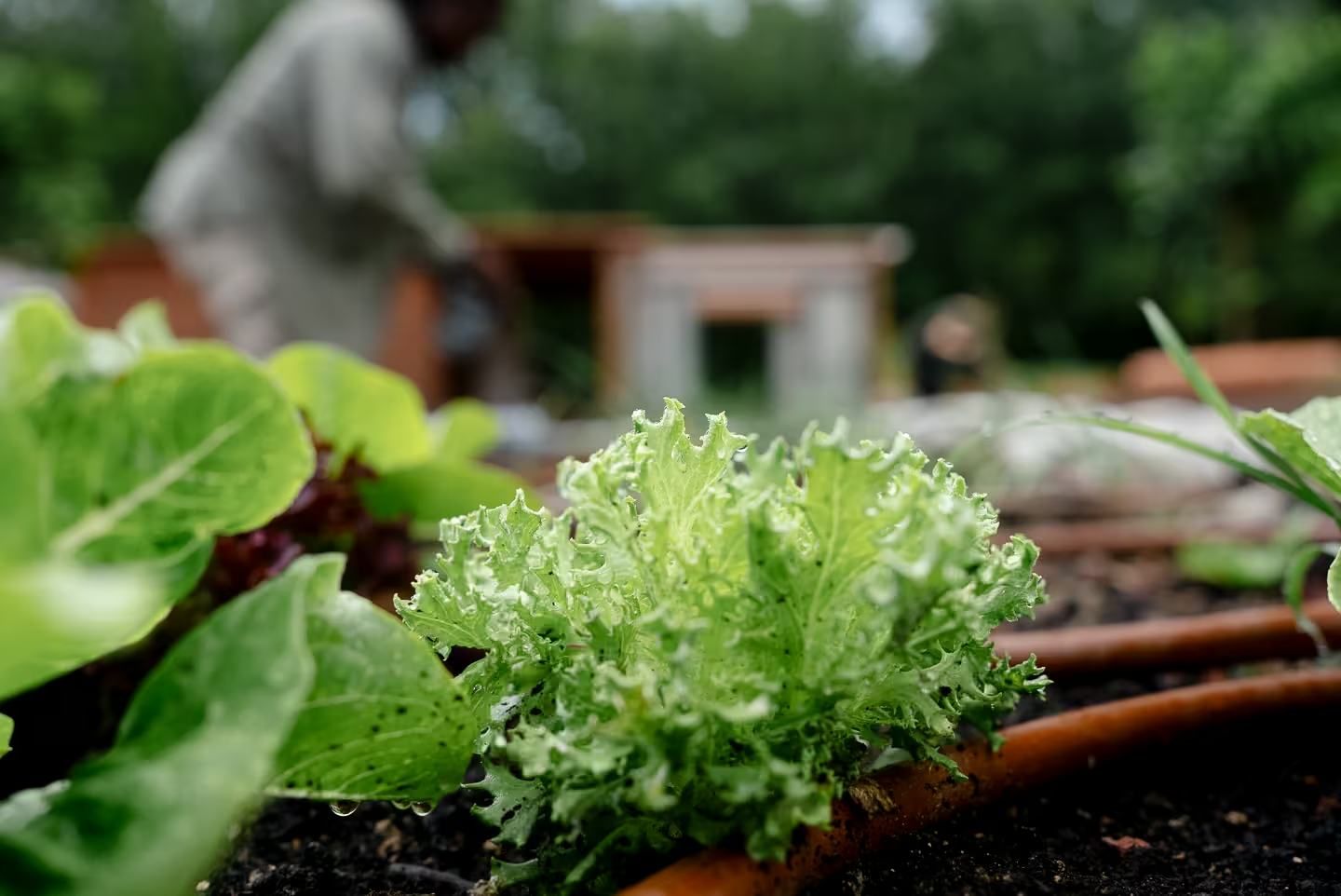
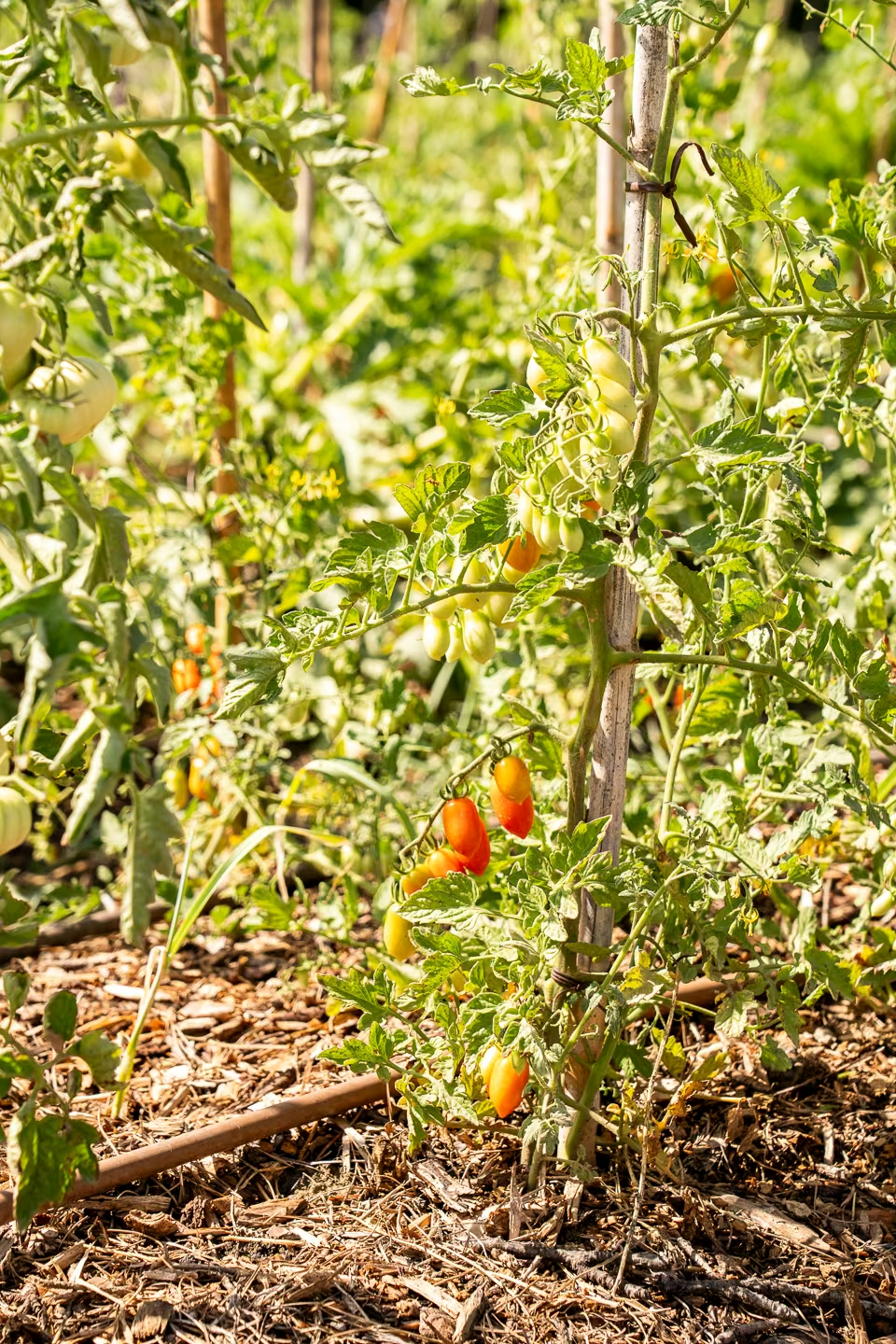
At One Belvedere Tuscany, rainwater collection and drip irrigation form part of a practical approach to water stewardship across the estate. Rainwater is collected for use where appropriate, while low-drip irrigation supports crops and gardens by applying water carefully and close to where plants need it. Established vineyards were managed without irrigation during the 2025 and 2026 vintages, while limited manual water-tank irrigation was used for approximately 2.8 hectares of newly planted vineyard areas during their establishment period.
Together, these practices reflect thoughtful water management within a 50-hectare rural estate shaped by vineyards, olive groves, orchards, gardens, and woodland. The estate combines several specific practices, including filtered wells, flow reducers on faucets, rainwater gathering, low-drip irrigation, and ultrafiltered water provided through the Zereau system.
How Does Rainwater Collection and Drip Irrigation Work at One Belvedere Tuscany?
At One Belvedere Tuscany, rainwater is collected as part of the estate’s wider water-management approach. Low-drip irrigation is used for crops and gardens, delivering water gradually rather than distributing it broadly across planted areas. This supports more controlled water use and allows irrigation to be managed according to the needs of cultivated areas.
The system sits alongside filtered wells and flow reducers installed on faucets. Together, these measures show that water stewardship is not centred on one technology. It is built through specific choices across farming, gardens, guest areas, and estate operations, with each measure contributing to a broader approach that considers how water is managed in different parts of the property and for different practical needs.
Why Does Water Stewardship Matter in Regenerative Agriculture?
Water management is closely connected to the way One Belvedere Tuscany approaches regenerative agriculture. The estate’s farming philosophy is influenced by regenerative and permaculture principles, with attention given to soil-focused management, water preservation, and long-term care of the land.
Rainwater collection and drip irrigation are practical tools. They help the estate manage available water with greater attention across cultivated spaces while respecting the different needs of vineyards, gardens, orchards, and other planted areas.
Established vineyards were managed without irrigation, with limited establishment watering used for newly planted vineyard areas. This reflects the estate’s focus on working with the characteristics of its land and seasonal conditions rather than applying the same water strategy everywhere.
Seasonal conditions also influence how water is approached across the property. By matching irrigation methods to specific cultivated areas and using limited establishment watering only where needed for newly planted vineyard areas, the estate can respond to different agricultural contexts without treating every part of the farm in the same way.
Rainwater Collection and Drip Irrigation Across the Estate
One Belvedere Tuscany is a 50-hectare rural estate located in the municipality of Poggibonsi, within the Chianti Classico landscape and close to Castellina in Chianti. The property includes vineyards, olive groves, orchards, vegetable gardens, arable areas, and natural vegetation. Managing water across such a varied rural landscape requires different responses for different spaces.
Across the estate, water management is shaped by the practical needs of each cultivated and hospitality area. This means that gardens, orchards, vineyard parcels, and guest spaces are not treated in exactly the same way. Rainwater collection forms part of this wider approach, while drip irrigation provides a more targeted method for cultivated areas where controlled watering is appropriate.
This varied approach allows the estate to manage water more thoughtfully across its different landscapes, while keeping each practice closely connected to the needs of the land and the way each area is used.
A Broader Approach to Thoughtful Hospitality
One Belvedere Tuscany also uses ultrafiltered water through the Zereau system. Filtered still and sparkling water is provided to guests, helping reduce reliance on transported bottled water. The Zereau eco-sustainability certificate recognises the estate’s use of ultrafiltered water and its contribution to reducing emissions associated with water consumption.
These measures sit within a broader approach to hospitality in which farm, water, energy, materials, and waste are considered together. The emphasis remains on specific practices that can be clearly understood.
For guests, this creates a transparent view of how rural hospitality and land management can intersect. Staying among vineyards, gardens, and olive groves is connected to the practical systems that support those landscapes and hospitality spaces each day.
Rainwater collection and drip irrigation at One Belvedere Tuscany show how water stewardship can be integrated into everyday farming and hospitality through defined practices. Rainwater collection, low-drip irrigation for crops and gardens, filtered wells, faucet flow reducers, ultrafiltered guest water through the Zereau system, and the estate’s approach to vineyard irrigation each play a distinct role.
Together, these choices reflect a considered approach to managing water across a diverse Tuscan estate while remaining connected to the rhythms and needs of the land.
Discover how a stay at One Belvedere Tuscany brings together rural hospitality, regenerative farming practices, food, wine, wellness, and a deeper connection to the Chianti landscape.
- Farm To Table, Sustainable Living