Carbon Footprint: One Belvedere Tuscany’s 2023 Sustainability Work
- Sustainable Living
Care for the Earth, Care for the People, Care for the Future. These are the core values on which OneBelvedere was founded. Therefore, our journey toward sustainability and environmental stewardship is ongoing, and we continuously strive to make a positive impact.
In 2023, we worked with Azzera on a carbon-footprint exercise to better understand identified sources of emissions. That work forms part of our sustainability history; it does not represent a current Net Zero commitment or an ongoing, formally monitored emissions-reduction programme.
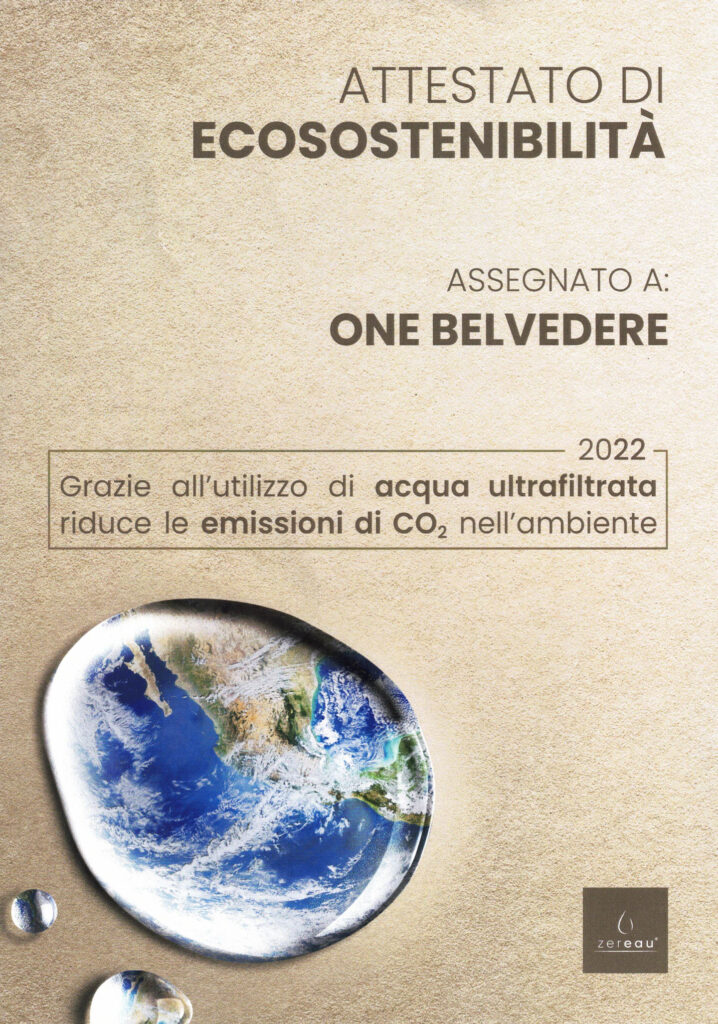
This article looks back at our 2023 work with Azzera on a carbon-footprint exercise, including the consideration of Scope 1, 2, and 3 emissions and carbon compensation at that time. It provides context for that exercise without presenting it as an active Net Zero commitment or a currently maintained emissions-reduction programme.
We also explain the concepts of carbon footprint, the Greenhouse Gas Protocol, science-based emissions reduction, and carbon offsetting. These concepts help place our earlier work in context and inform our continuing interest in environmental stewardship.

Measuring emissions is an important step in understanding an organisation’s carbon footprint and identifying opportunities for reducing its environmental impact. Our work with Azzera in 2023 included a carbon-footprint exercise and consideration of approaches to emissions management.
Science-based targets (SBTs) provide a framework for reducing greenhouse gas (GHG) emissions in line with climate science and the Paris Agreement’s goals.
Carbon offsets are another approach sometimes considered within climate strategies, although they do not replace the need to reduce emissions. Depending on the project and its verification, they may offer additional benefits, such as supporting biodiversity, improving air and water quality, and contributing to the United Nations Sustainable Development Goals. Some projects may also have positive social impacts, benefiting local communities through employment opportunities and improved livelihoods. These potential benefits should be assessed individually rather than assumed.

One Belvedere Tuscany's 2023 Carbon-Footprint Work: An Overview
In 2023, One Belvedere Tuscany worked with Azzera on a carbon-footprint assessment informed by the Greenhouse Gas (GHG) Protocol. The exercise considered Scope 1, 2, and 3 emissions as part of our earlier sustainability work, rather than an ongoing Net Zero commitment or carbon-mitigation programme.
The Greenhouse Gas (GHG) Protocol provides a standardized framework for classifying and reporting greenhouse gas emissions, expressed in carbon dioxide equivalent (CO2e). The protocol defines three distinct scopes of emissions:
These emissions directly result from our organization’s operation. Scope 1 emissions include all emissions from sources that are owned or controlled by One Belvedere. For instance, all emissions from our vehicle are considered our Scope 1 emissions.
Second Scope of emissions includes the generated emissions from the production of energy that One Belvedere purchases and consumes. The purchased emissions include electricity, heating, cooling or steam.
Although the emissions have already occurred in a different physical location (e.g. a power plant), they are attributed to our brand as we consume this energy for our operations.
The final scope of emissions counts all activities that are not directly owned or controlled by One Belvedere but are still a part of our value chain. Scope 3 emissions encompass a wide range of sources, such as those generated by suppliers, transportation and distribution of products, employee commuting, business travel, and waste disposal.

Understanding Carbon Footprint, Emission Measurement, and the GHG Protocol
A carbon footprint is the total amount of GHG emissions caused by an organization, event, product, or individual, usually expressed in terms of carbon dioxide equivalent (CO2e). CO2e is a standard unit for measuring carbon footprints, which encompasses the different greenhouse gasses and their relative global warming potentials.
Emission measurement is crucial for understanding and managing our carbon footprint. The Greenhouse Gas Protocol (GHG Protocol) is the most widely used international accounting tool for government and business leaders to quantify and manage greenhouse gas emissions. Developed by the World Resources Institute (WRI) and the World Business Council for Sustainable Development (WBCSD), the GHG Protocol provides a consistent and transparent framework for measuring, reporting, and verifying emissions.

(1). The Science-Based Targets Initiative (SBTi) and Emission Reduction
The Science-Based Targets Initiative (SBTi) is a collaboration between CDP, the United Nations Global Compact, the World Resources Institute (WRI), and the Worldwide Fund for Nature (WWF). The SBTi aims to drive ambitious climate action by encouraging companies to set emissions reduction targets based on the latest climate science.
(2). By aligning their targets with the Paris Agreement’s goals, businesses can ensure they are contributing to the global effort to prevent the worst impacts of climate change.
Companies participating in the SBTi commit to setting targets for reducing their Scope 1, 2, and 3 GHG emissions. These targets are validated by the SBTi to ensure they meet stringent criteria, providing confidence that the targets are ambitious, meaningful, and based on the latest climate science.
Carbon Offsets in Climate Strategies
While reducing emissions should remain the primary focus, carbon offsetting is sometimes used as a complementary measure within climate strategies. Carbon offsets represent the reduction, removal, or avoidance of GHG emissions through specific projects, with credits that may be used to compensate for emissions elsewhere. The credibility and environmental integrity of these projects depend on factors such as independent verification, additionality, permanence, and the avoidance of double counting.
By supporting carbon offset projects, companies may contribute to renewable energy development, improved energy efficiency, forest protection and restoration, or sustainable agriculture. Depending on the project and its verified outcomes, additional benefits may include biodiversity conservation, improved local air and water quality, and social or economic development in local communities.
Reflecting on One Belvedere Tuscany's Sustainability Journey
Our 2023 carbon-footprint work with Azzera formed part of our broader sustainability journey and reflected One Belvedere Tuscany’s values of care for the Earth, care for people, and care for the future. This earlier initiative contributed to our understanding of environmental responsibility without establishing an ongoing Net Zero commitment or a formal emissions-reduction programme.
This work remains part of our sustainability history, alongside the practical initiatives we continue to develop across the estate. By communicating our activities transparently and focusing on documented practices, we aim to strengthen trust and support the long-term resilience of One Belvedere Tuscany.
Conclusion
Our 2023 carbon-footprint work with Azzera marked a step in One Belvedere Tuscany’s journey towards sustainability. The exercise helped us explore how greenhouse gas emissions can be measured and understood, without establishing a current Net Zero commitment, verified emissions reductions, or an ongoing carbon-offset programme. We remain steadfast in our core values and continue to focus on environmental stewardship and social responsibility through practical, documented initiatives.
We look forward to sharing our sustainability developments with our guests, partners, and stakeholders as this journey continues.

The Science Based Targets initiative (SBTi) encourages companies to set emissions-reduction targets based on the latest climate science. Participating businesses may establish targets covering relevant Scope 1, 2, and 3 greenhouse gas emissions. Carbon offset projects can support activities such as renewable energy development, improved energy efficiency, forest protection and restoration, and sustainable agriculture, although their environmental benefits depend on the individual project’s integrity and verification. For One Belvedere Tuscany, the work undertaken with Azzera in 2023 represents a historical carbon-footprint exercise, rather than participation in the SBTi or an active Net Zero strategy. Our sustainability journey continues through practical initiatives and a commitment to transparent communication about our progress.
Summary
In 2023, One Belvedere Tuscany worked with Azzera on a carbon-footprint exercise to better understand identified sources of greenhouse gas emissions. The exercise considered Scope 1, 2, and 3 emissions within the framework of the Greenhouse Gas Protocol (GHG Protocol), alongside approaches to emissions management and carbon compensation. Science-based targets (SBTs) and the Science Based Targets initiative (SBTi) provide broader context for understanding emissions-reduction strategies aligned with climate science and the Paris Agreement. This historical work forms part of One Belvedere Tuscany’s sustainability journey but does not represent a current Net Zero commitment, participation in the SBTi, or an ongoing, formally monitored emissions-reduction programme.